October 7, 2026
Fenbendazole Api Powder: Understanding Purity, Specifications And Quality Documentation
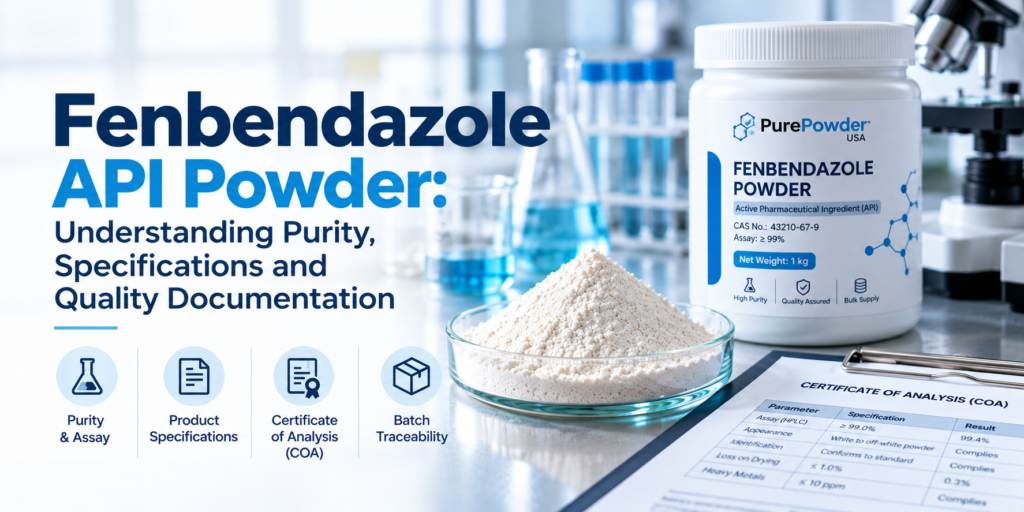
When sourcing an active pharmaceutical ingredient, the product name and stated purity are only part of the information buyers need to evaluate. Fenbendazole API powder should be considered alongside its specifications, batch information, testing documentation and other quality records relevant to the intended application.
For pharmaceutical manufacturers, formulation companies, laboratories, research organizations and other qualified buyers, understanding API documentation can make the procurement process more transparent. It can also help buyers compare products based on technical information rather than relying solely on price or marketing claims.
This guide explains what fenbendazole API powder is, how to understand common quality specifications, what information may appear on a Certificate of Analysis (COA), and what buyers should consider when evaluating API material.
Important: This article is provided for product and procurement information only. Fenbendazole is not presented as a treatment or recommendation for human use. Buyers are responsible for determining appropriate use and complying with applicable regulatory, safety and handling requirements.
What Is Fenbendazole Api Powder?
An active pharmaceutical ingredient (API) is an active substance used as an input material in the development or manufacture of a pharmaceutical or other applicable product.
Fenbendazole can be supplied in powder form as an API or raw material for qualified applications. Unlike a finished dosage form, API powder is not necessarily ready for direct use as a finished product. It may instead become part of a subsequent manufacturing, formulation, research or development process.
When evaluating fenbendazole API powder, buyers should look beyond the product name and review the technical information available for the specific material.
Important information may include:
- Product identity
- Stated assay or purity
- Product specifications
- Batch or lot information
- Testing information
- Certificate of Analysis
- Safety documentation
- Storage and handling requirements
The exact documentation and specifications required depend on the buyer’s intended application and applicable standards.
What Does Purity Mean For Fenbendazole Api Powder?
Purity is one of the most commonly referenced characteristics when evaluating API powder.
A product described as having a particular purity percentage indicates the stated level of the target substance according to the applicable specification or testing method. However, the percentage itself does not tell the entire quality story.
Buyers should also understand how the material was tested and what specifications apply.
For example, two products may display similar purity percentages but have different documentation, testing parameters, batch information or specifications.
This is why professional buyers should evaluate the available quality documentation rather than making a purchasing decision based on a single number.
Why The Stated Purity Matters
Purity information can help buyers determine whether a material is potentially suitable for their intended process or application.
However, suitability should always be determined against the buyer’s own technical requirements.
For this reason, a good procurement process considers:
- Stated assay or purity
- Applicable specification
- Testing method
- Batch information
- Supporting documentation
Understanding Fenbendazole Product Specifications
A product specification defines the quality parameters against which a material may be evaluated.
Depending on the supplier and product, specifications can contain several different types of information.
Assay Or Purity
Assay information indicates the measured amount of the target substance according to the applicable analytical method.
When reviewing assay information, buyers should look at the stated specification as well as the actual result where batch-specific testing is provided.
Identification
Identification testing helps establish that the material corresponds to the specified substance.
The exact analytical method can vary depending on the product and applicable testing requirements.
Appearance
Appearance may describe characteristics such as the physical form or visual properties of the material.
Although appearance alone cannot establish product quality, it can be one component of a broader specification.
Other Quality Parameters
Depending on the product and applicable specifications, documentation may also contain information about other quality parameters or potential impurities.
The specific parameters included will depend on the supplier’s product specifications and the intended application.
How To Read A Certificate Of Analysis (Coa)
A Certificate of Analysis (COA) is one of the most useful documents for evaluating a specific batch of API material.
A COA generally provides testing information for a particular batch or lot rather than simply describing the product in general terms.
When reviewing a fenbendazole COA, buyers should look for several key pieces of information.
Product Identification
The document should clearly identify the product being tested.
This helps establish that the COA corresponds to the material being supplied.
Batch Or Lot Number
The batch or lot number is particularly important because it connects the test results to a specific quantity of material.
Where batch-specific documentation is provided, buyers should confirm that the batch information corresponds to the material they are purchasing.
Test Parameters
A COA may list the quality characteristics that were tested.
Depending on the applicable specification, this could include assay, identification and other relevant quality parameters.
Specification And Result
One of the most useful parts of a COA is the distinction between the specified requirement and the actual test result.
For example, a document may provide a specification range alongside the measured result for the particular batch.
This allows buyers to compare the actual result against the stated acceptance criteria.
Testing Information
Where available, information about analytical methods or testing procedures can provide additional context about how the reported results were obtained.
Buyers should review the documentation according to their own technical and quality requirements.
Why Batch-Level Documentation Matters
A general product specification describes what a material is expected to meet.
Batch-level documentation provides information about a specific lot of material.
This distinction matters when organizations purchase API powder for professional applications.
For example, a buyer may have a general specification for a particular product, but the COA for the supplied batch provides the actual testing results associated with that lot.
Batch information can therefore help with:
- Product traceability
- Quality review
- Inventory records
- Supplier evaluation
- Internal documentation
- Repeat purchasing
For organizations purchasing API material regularly, maintaining clear batch records can make future procurement and quality checks easier.
Api Powder Vs. Finished Product
It is important to distinguish between an API powder and a finished product.
An API is generally an active ingredient or raw material used as part of a subsequent process.
A finished product has undergone additional manufacturing or formulation steps and is supplied in its intended finished form.
This means an API powder should not automatically be treated as equivalent to a finished pharmaceutical product.
Buyers evaluating fenbendazole API powder should therefore understand:
- The form of material being purchased
- The stated specifications
- The available documentation
- The intended application
- Applicable handling and regulatory requirements
Understanding this distinction helps prevent confusion during procurement.
What Quality Documentation Should Buyers Request?
Documentation requirements can vary depending on the buyer and intended application.
However, qualified buyers may want to ask about the availability of documents such as:
Certificate Of Analysis
A COA provides batch-specific testing information where applicable.
Material Safety Data Sheet / Safety Data Sheet
Safety documentation can provide information relevant to handling, storage, hazards and emergency procedures.
Product Specification
A specification document can describe the quality parameters and acceptance criteria applicable to the material.
Batch Information
Batch or lot information helps establish traceability between the material and its supporting documentation.
Not every buyer will require the same documentation, so requirements should be established before purchasing.
How To Evaluate Fenbendazole Api Quality
Evaluating API quality should be based on the complete available information rather than a single specification.
A practical review can include four areas:
Product:
Is the material clearly identified and described?
Specifications:
Are the applicable quality parameters clearly stated?
Documentation:
Are relevant quality and safety documents available?
Traceability:
Can the material be associated with a specific batch or lot where applicable?
This approach gives buyers a more complete picture of the material they are considering.
It also helps create a more consistent procurement process when comparing suppliers.
Questions To Ask A Fenbendazole Api Supplier
Before purchasing fenbendazole API powder, qualified buyers may want to ask:
What Is The Stated Purity Or Assay?
Ask for the applicable specification and understand how the stated value is determined.
Is A Batch-Specific Coa Available?
Confirm whether a Certificate of Analysis can be provided for the relevant batch.
What Specifications Are Available?
Ask for the current product specification so your technical team can evaluate the material against its requirements.
What Safety Documentation Is Available?
Determine whether an MSDS/SDS or other relevant safety documentation is available.
How Is The Material Identified And Packaged?
Confirm the product labeling, batch information and packaging format.
What Are The Storage Requirements?
Review the supplier’s stated storage and handling conditions before purchasing.
Is The Material Suitable For My Intended Application?
The buyer should determine whether the material meets its own technical, regulatory and application-specific requirements.
Fenbendazole Api Powder From Purepowder
PurePowder supplies fenbendazole powder for qualified research, manufacturing, formulation and other applicable business requirements.
Product information, specifications and available documentation can help buyers evaluate the material before placing an order.
For detailed product information and current availability, visit the Fenbendazole Powder Product Page.
Buyers with specific documentation, quantity or product requirements can contact PurePowder to discuss their needs.
Conclusion
Evaluating fenbendazole API powder involves more than reviewing a stated purity percentage. Product specifications, batch information, testing results and supporting documentation can all contribute to a clearer understanding of the material being supplied.
For qualified buyers, reviewing the COA, product specifications, safety documentation and traceability information can provide a more complete basis for evaluating an API supplier.
A structured approach to API procurement helps buyers compare materials based on relevant technical information and determine whether the product aligns with their specific requirements.
Frequently Asked Questions
What Is Fenbendazole Api Powder?
Fenbendazole API powder is fenbendazole supplied in powdered active-ingredient form for qualified applications such as research, formulation, manufacturing and other applicable processes.
What Does Fenbendazole Purity Mean?
Purity or assay indicates the measured amount of the specified substance according to an applicable testing method or specification. Buyers should review the complete product documentation rather than relying only on the stated percentage.
What Is A Coa For Fenbendazole?
A Certificate of Analysis is a quality document that can provide test results for a particular batch or lot of material. It may include specifications, actual results and other relevant testing information.
Why Is Batch Information Important?
Batch or lot information helps connect a specific quantity of material with its relevant quality documentation, supporting traceability and procurement records.
What Documents Should I Request From An Api Supplier?
Depending on the application, buyers may request a Certificate of Analysis, product specifications, safety documentation and relevant batch information.
Is Api Powder The Same As A Finished Product?
No. API powder is an active ingredient or raw material that may be used in a subsequent process, while a finished product has undergone additional manufacturing or formulation steps.